|
| The Latest News from Your State Representative |
| [[Share On Facebook]] |
| Please do not reply to this e-mail, as I am unable to respond to messages sent to this address. You can contact me directly at vgaydos@pahousegop.com or here. |
| #Listrak\DateStampLong# |
Examining the Impact of AI on Children
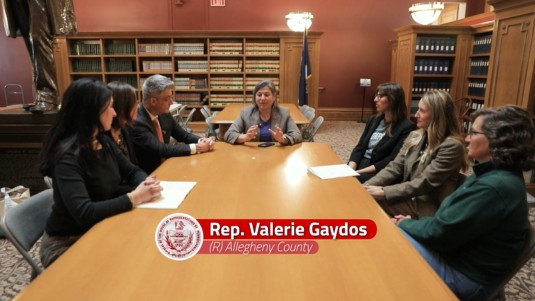
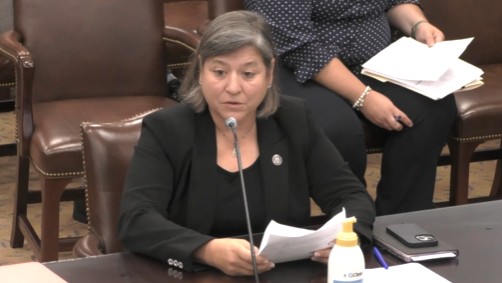
The House Communications and Technology Committee recently held a public hearing on House Bill 2637, which would establish a three-year prohibition on the sale, distribution and manufacture of children’s toys that incorporate AI chatbots. The goal is to allow additional time for research and consideration of how interactive AI technology may affect children.
Following the hearing, I sat down with several of the expert panelists to discuss the potential benefits and concerns surrounding the legislation. As AI continues to become a bigger part of our lives, we need to make sure the technology our children use is safe, effective and legal.
AI is going to be part of our children’s future, but we cannot allow technology to replace curiosity, problem-solving, creativity or the ability to question what we are being told. Our children need to learn how to think, not simply what to think.
Please watch the video to hear more about the discussion and why this is an important conversation for parents, educators and policymakers.
|
Promoting Safe and Responsible AI Companionship
Artificial intelligence (AI) is rapidly becoming part of our everyday lives, but with that innovation comes a responsibility to protect users. I supported House Bill 2006, which passed the House this week with bipartisan support and now moves to the Senate for consideration.
As loneliness continues to affect millions of people, AI companionship is growing rapidly, with some companies reporting more than 20 million active users each month. Some users have developed deep emotional and even romantic attachments to AI companions, raising concerns about unhealthy or addictive relationships.
House Bill 2006 would require AI companionship applications to implement safety features during extended interactions and establish safety protocols when users discuss suicidal ideation or self-harm. It would also require reminders that an AI companion is not a human being.
We cannot stop innovation, nor should we. But we can make sure AI develops responsibly, with safety and transparency at the forefront.
|
Protecting Pennsylvanians from Deceptive AI
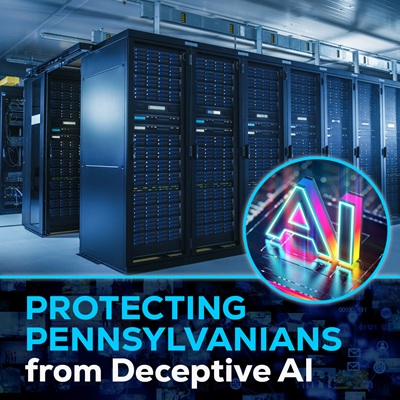
I’m supporting bipartisan legislation that will be introduced to protect Pennsylvanians from Artificial Intelligence (AI) chatbots that falsely claim to be licensed professionals or use fake professional credentials.
As AI becomes a bigger part of our everyday lives, consumers need to know who and what they are interacting with. This legislation would prohibit AI chatbots from falsely claiming to hold a Pennsylvania professional license or using false credentials, while also requiring clear disclosure that they are not licensed professionals when discussing matters within a licensed profession.
As a member of the House Professional Licensure Committee and chair of the Pennsylvania House Artificial Intelligence Opportunity Task Force, our laws need to keep pace with rapidly changing technology. AI can be a useful tool, but it should never create confusion about whether someone is receiving advice from a licensed professional.
The legislation would also give the Office of Attorney General enforcement authority, including the ability to impose civil penalties for violations. My goal is to make sure we embrace the opportunities AI offers while putting reasonable protections in place for our children, families and consumers.
|
Strengthening Protections for Older Pennsylvanians
Our older parents and grandparents deserve to know they will be treated with dignity, care and respect when they need help. I’m supporting legislation to strengthen oversight of Pennsylvania’s 52 Area Agencies on Aging and the services they provide to older adults.
For many families, knowing that a loved one is safe and receiving the help they need provides important peace of mind. This legislation would add safeguards to the Department of Aging’s monitoring of older adult protective services and follows a recent performance audit that identified areas where oversight of elder abuse investigations can be improved.
The legislation would strengthen accountability, transparency, investigation procedures, record keeping and staff training. These improvements can help ensure concerns are addressed appropriately and seniors and their families have confidence in the systems in place to protect and support them.
Protecting older Pennsylvanians is a responsibility I take seriously. We should always look for ways to improve the services and safeguards available to our seniors and make sure they receive the dignity, care and protection they deserve.
|
Independent Voters Deserve a Voice
On Tuesday, I voted in favor of the open primaries bill, legislation that would allow unaffiliated Pennsylvania voters to participate in primary elections.
More than 1.3 million Pennsylvanians are registered without affiliation to either major political party. They pay taxes that fund our elections, yet they are shut out of the primary process that determines which candidates move forward to the general election.
That needs to change.
Independent voters are the fastest-growing political designation in our Commonwealth. They include veterans, young voters, and countless Pennsylvanians who simply do not believe either political party represents their views. They should not be treated as second-class citizens in our political process.
The open primaries bill would give these taxpayers a greater voice, encourage broader civic participation, and bring more Pennsylvanians into the process. It is also an opportunity to bring people together rather than continue dividing them by party labels.
Our democracy is stronger when more citizens have a meaningful opportunity to participate. If Pennsylvanians are helping fund our elections, they deserve a voice in the process.
House Bill 280 passed the House and now moves to the Senate.
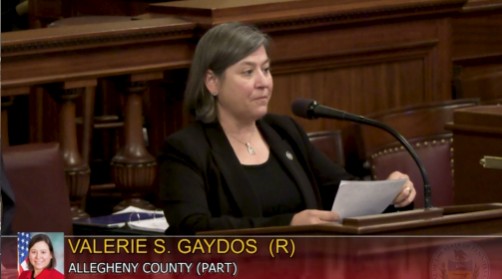
I spoke to my colleagues on the House floor about why this legislation matters and why I believe every taxpayer deserves a voice.
|
Honoring Hungary’s Fight for Freedom
I was proud to speak in support my House Resolution 626 before the House Tourism, Recreation and Economic Development Committee. The resolution would designate October 23, 2026, as Hungarian Revolution Memorial Day in Pennsylvania.
This year marks the 70th anniversary of the 1956 Hungarian Revolution, when the Hungarian people rose against Soviet domination and fought for freedom and independence. It also marks the 37th anniversary of Hungary’s peaceful transition from communist rule to democracy.
These milestones remind us of the enduring importance of freedom, sovereignty and self-determination.
The resolution also recognizes the many contributions of Hungarian Americans to Pennsylvania. For generations, Hungarian immigrants and their descendants have helped build our communities, particularly in western Pennsylvania and our steel and industrial regions.
House Resolution 626 passed unanimously out of committee and now moves to the full House for consideration.
Watch my remarks to the committee to learn more about Hungary’s fight for freedom and the enduring bond between Hungary and Pennsylvania.
|
The People and Places Behind Pittsburgh’s WWII Story
As we continue exploring the very special history we have in our community, I wanted to take a closer look at some of the people, places and stories that helped shape the communities we know today.
Did you know Pittsburghers played an important role in helping the United States win World War II? The work being done throughout our region helped keep our troops supplied and our nation moving forward.
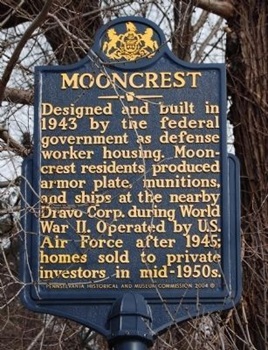
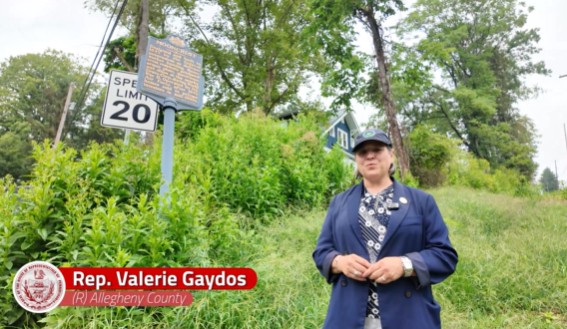
One of the most interesting parts of that story is Mooncrest, a community in Moon Township that was built during the war to provide housing for workers who were part of this incredible effort.
It’s a fascinating piece of our local history and a reminder of just how much Pittsburgh and the surrounding communities contributed to the war effort.
Please take a moment to watch my video as I share more about Pittsburgh’s role in World War II and the story behind Mooncrest.
|
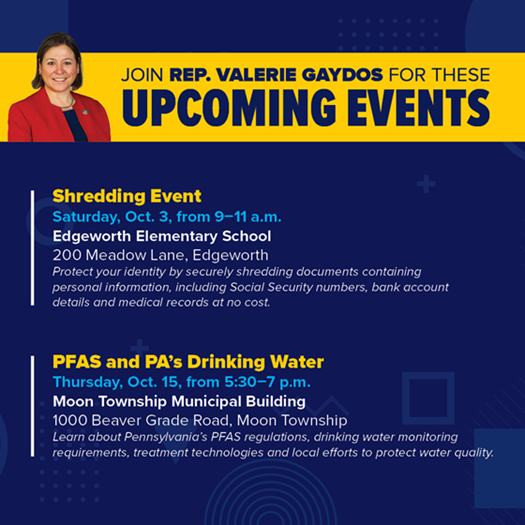
My Events Are Right Around the Corner!
| |
• |
Shredding Event - Securely dispose of documents containing personal and sensitive information to help protect against identity theft. |
| |
• |
PFAS and PA’s Drinking Water - Learn about per- and polyfluoroalkyl substances (PFAS), drinking-water regulations and monitoring, treatment options, and efforts to protect water quality. |
|
Department of Health Withdraws Overreaching Regulations
IIn a major victory for parental rights, medical privacy and constitutional liberties, the Pennsylvania Department of Health has withdrawn its aggressive, overreaching regulatory proposal governing communicable and noncommunicable diseases in the Commonwealth.
Last week, I joined 80 of my fellow House members in submitting comments to the Independent Regulatory Review Commission raising serious questions about this extreme proposal. Our voices were just some of the nearly 6,000 people who weighed in on the plan, the overwhelming majority of whom opposed the regulations.
Department officials indicate they plan to resubmit the updated regulations once Pennsylvanians’ feedback has been addressed, so I will be taking a close look at any new plans in the weeks ahead.
Thank you to everyone who took the time to speak out in defense of your rights. It makes a difference!
Click on the link to read our comment letter.
|
Establishing Guardrails for Automated Surveillance
The House Republican Policy Committee held a hearing this week titled “Protecting the Fourth Amendment: Establishing Guardrails for Automated Surveillance” to examine automated license plate reader (ALPR) technology and its implications for public safety, privacy and the Fourth Amendment.
In response to growing concerns about ALPRs, legislation has been introduced to set statewide limits on the collection and retention of personally identifiable information and require judicial oversight in certain circumstances. Additionally, companion legislation would allow local municipalities to decide whether to allow these cameras in their communities. A proposal to prevent private vendors from sharing license plate data without authorization is also being discussed.
Testifiers included Lawrence Gerrity of the Pennsylvania Fraternal Order of Police; Abington Police Chief Patrick Malloy, who serves as president of the Pennsylvania Police Chiefs Association; Jim Harper of the American Enterprise Institute; and Neal Kurk, former member of the New Hampshire House of Representatives.
Watch the full hearing here.
|
Avoid Health Insurance Scams
With annual open enrollment periods set to begin soon for both Medicare and Pennie, the state’s health insurance marketplace, the Federal Trade Commission (FTC) is offering tips for consumers to avoid being scammed.
When researching options online, type the name of the website directly into the search engine. For Medicare, it’s Medicare.gov, or call 800-633-4227. Pennie’s website is www.Pennie.com or call 844-844-8040.
Take your time. Look for small “Ad” or “Sponsored” labels next to search results to identify paid ads and scroll past them.
Get help to compare costs, coverage and plans. Assistance with Medicare is available through Pennsylvania Medicare Education and Decision Insight (PA MEDI), provided by the Department of Aging. Call the PA MEDI Helpline at 800-783-7067 (Monday through Friday, 8 a.m. to 5 p.m.) or reach out to your local county Area Agency on Aging (AAA) for one-on-one phone, virtual or in-person counseling sessions.
Suspect a health insurance scam? Tell the FTC at ReportFraud.ftc.gov and the Pennsylvania Office of Attorney General. If the scam involves Medicare, report it at Medicare.gov or call 800-633-4227.
|
|